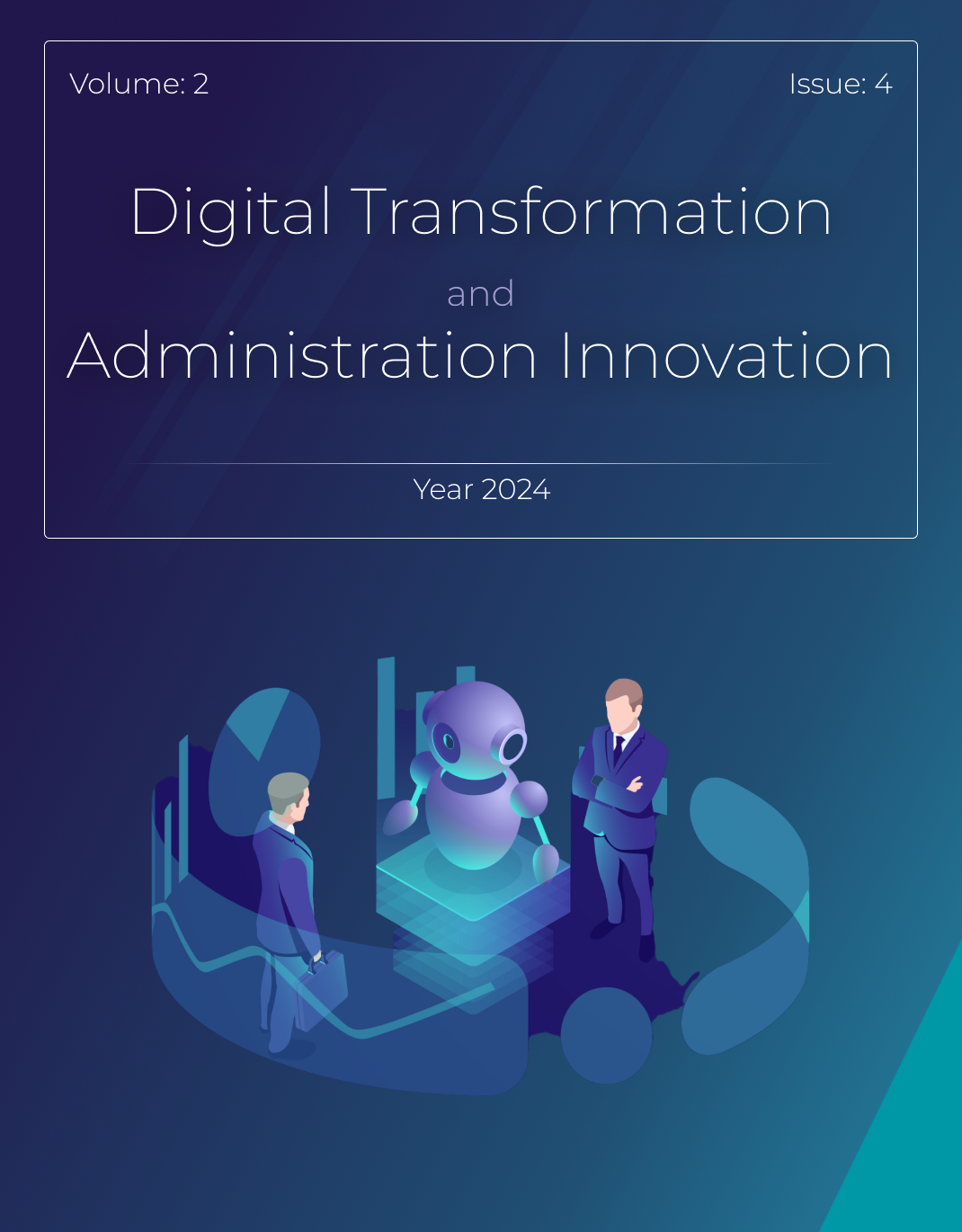
Artificial Intelligence in Geopolitics: Opportunities and Challenges for National Power
Keywords:
Artificial intelligence, military power, political power, economic power, scientific-technological powerAbstract
In early September 2017, Vladimir Putin, the President of Russia, brought artificial intelligence from the laboratories of Silicon Valley, universities, and the basement of the Pentagon to the forefront of international power. He stated that artificial intelligence is the future not only for Russia but for all of humanity. This phenomenon is accompanied by vast opportunities but also presents threats that are difficult to predict. Whoever becomes the leader in this field will become the ruler of the world. Accordingly, artificial intelligence has been prioritized by countries as an instrument for enhancing national power. The aim of this article is to examine the opportunities and challenges of artificial intelligence as a tool of national power for countries in economic, political, scientific, and military dimensions. To achieve this aim, a descriptive-analytical method was employed. The findings indicate that artificial intelligence, across economic, military, political, and scientific domains, can enhance both material capabilities (such as growth in gross domestic product, number of publications, production of high-technology products, and undetectable drones) and nonmaterial capabilities (such as increased public participation, rational political decision-making, and combating racial and political discrimination). These enhancements contribute to increasing countries’ capacity for international competition and securing the global digital sphere. However, insofar as geopolitical relations among countries are shaped by interactions, conflicts, and rivalries, concerns regarding military, economic, political, and technological superiority will persist. These concerns have the potential to affect national security and international relations due to the volume of big data being generated. Therefore, although artificial intelligence represents a significant potential geopolitical advantage for national power, it may also pose a distinct challenge to the current balance of power.
Downloads
References
Acemoglu, D., & Restrepo, P. (2022). Tasks, Automation, and Wage Inequality. Econometrica, 90(5), 1973-2016. https://doi.org/10.3982/ECTA19815
Ade-Ibijola, A., Young, K., Sivparsad, N., & et al. (2022). Teaching Students About Plagiarism Using a Serious Game. JMIR serious games, 10(1). https://doi.org/10.2196/33459
Ahmad, S. F., Han, H., & Alam, M. M. (2023). Impact of AI on Human Loss in Decision Making, Laziness, and Safety in Education. Humanities & Social Sciences Communications, 10, 311.
Ahmed, N., Wahed, M., & Thompson, N. C. (2023). The Growing Influence of Industry in AI Research. Science, 379(6635), 884-886.
Akbar, A., Khan, A., Carrez, F., & Moessner, K. (2017). Predictive Analytics for IoT Streams. Ieee Internet of Things Journal, 4(5), 1571-1582.
Ali, O., Abdelbaki, W., & Shrestha, A. (2023). Systematic Literature Review of AI in Healthcare. Journal of Innovation & Knowledge, 8, 100333.
Amaresh, P. (2022). How the Fourth Industrial Revolution Is Changing Our Economy.
Anand, R., Mishra, S., & Spatafora, N. (2012). Structural Transformation & Production Sophistication.
Angwin, J., Larson, J., Mattu, S., & Kirchner, L. (2016). Machine Bias.
Bessen, J. (2022). New Goliaths. Yale University Press.
Biden, J. (2023). Remarks by President Biden on Artificial Intelligence. https://www.whitehouse.gov
Bloomberg, N. (2023). China’s Xi Vows Victory in Tech Battle After US Chip Curbs. https://www.bloomberg.com
Bostrom, N. (2014). Superintelligence: Paths, Dangers, Strategies. Oxford University Press.
Brooks, S., & Wohlforth, W. (2016). The Rise and Fall of Great Powers. International Security, 40(3), 7-53.
Brynjolfsson, E., Collis, A., Diewert, W., Eggers, F., & Fox, K. (2019). GDP-B: Value of Free Goods.
Brynjolfsson, E., Jin, W., & Wang, X. (2023). IT, Firm Size and Industrial Concentration.
Bui, T. H., & Nguyen, V. P. (2023). The Impact of AI and Digital Economy on Vietnam’s Legal System. International Journal for the Semiotics of Law, 36, 969-989.
Buolamwini, J., & Gebru, T. (2018). Gender Shades. Proceedings of Machine Learning Research,
Cadot, O., & Gourdon, J. (2016). Non-Tariff Measures and Prices. Review of World Economics, 152(2), 227-249.
Cavus, N., Mohammed, Y. B., & Yakubu, N. M. (2021). Determinants of Learning Management Systems during COVID-19. Sustainability, 13(9), 5189.
Chuang, H. M., & Cheng, D. W. (2022). Conversational AI Over Military Scenarios. Applied Sciences, 12(5), 2494.
Criddle, C., & Murphy, H. (2023). OpenAI Chief Says New Rules Are Needed. https://www.ft.com
Dick, S. (2019). Artificial Intelligence. Harvard Data Science Review, 1.
Education, I. B. M. C. (2020). Artificial Intelligence (AI). https://www.ibm.com/cloud/learn/what-is-artificial-intelligence
Elali, F. R., & Rachid, L. N. (2023). AI-generated Paper Fabrication. Patterns, 4, 100706.
Espinoza, J., & Johnston, I. (2023). EU Lawmakers Agree Tough Measures Over Use of AI. https://www.ft.com
Ferguson, A. G. (2017). The Rise of Big Data Policing. New York University Press.
Gallego, A., & Kurer, T. (2022). AI and the Workplace. Annual Review of Political Science, 25, 463-484. https://doi.org/10.1146/annurev-polisci-051120-104535
Gallipoli, G., & Makridis, C. (2018). Structural Transformation & IT. Journal of Monetary Economics, 97, 91-110.
Gao, L., Chen, Y., Zhang, B., & Gao, Y. (2019). Real-time UAV Detection Using YOLOv3. IEEE Access, 7, 35028-35036.
Garrido-Hidalgo, C., Javier, F., Ramirez, T., Olivares, & Roda-Sanchez, L. (2020). Adoption of IoT in Circular Supply Chains…. Waste Management, 103, 32-44.
Ghani, E., Goswami, A., & Kerr, W. (2016). Golden Quadrilateral Project Impact. Economic Journal, 126, 317-357.
Ghani, E., & O’Connell, S. (2014). Services as Growth Escalator.
Gilli, A., & Gilli, M. (2019). Why China Has Not Caught Up Yet. International Security, 43(3), 141-189.
Goertzel, B., Goertzel, T., & Goertzel, Z. (2017). The Global Brain and the Emerging Economy of Abundance. Technological Forecasting & Social Change, 114, 65-73.
Gorman, C. Recent Developments in AI and National Security: What You Need to Know. Lawfare. https://www.lawfareblog.com
Granados, O. M., & De la Peña, N. (2021). AI and International System Structure. Revista Brasileira de Política Internacional.
Herrendorf, B., Rogerson, R., & Valentinyi, A. (2014). Growth and Structural Transformation. In Handbook of Economic Growth. Elsevier.
Heylighen, F. (2017). Towards an Intelligent Network for Matching Offer and Demand. Technological Forecasting & Social Change, 114, 74-85.
Hunter, J. (2018). Artificial Intelligence in School Education. Education Technology Solutions.
Jobin, A., Ienca, M., & Vayena, E. (2019). The Global Landscape of AI Ethics Guidelines. Nature Machine Intelligence, 1, 389-399.
Johnsen, F. T., Zielinski, Z., & Wrona, K. (2018). Application of IoT in Military Operations. ICMCIS 2018,
Jungherr, A., & Schroeder, R. (2022). Digital Transformations of the Public Arena. Cambridge University Press. https://doi.org/10.1017/9781009064484
Jungherr, A., & Schroeder, R. (2023). Artificial Intelligence and the Public Arena. Communication Theory, 33(3). https://doi.org/10.1093/ct/qtad006
Justin, R., & Mizuko, I. (2017). From Good Intentions to Real Outcomes. https://clalliance.org
Kak, A. (2018). The Emergence of the Personal Data Protection Bill, 2018. Economic and Political Weekly, 53, 12-16.
Kitchens, B., Johnson, S. L., & Gray, P. (2020). Understanding Echo Chambers and Filter Bubbles. MIS quarterly, 44(4), 1619-1649.
Klopfenstein, L. C., Delpriori, S., Malatini, S., & Bogliolo, A. (2017). The Rise of Bots: A Survey. Proceedings of the 2017 Conference on Designing Interactive Systems,
Köbis, L., & Mehner, C. (2021). Ethical Questions Raised by AI-supported Mentoring. Frontiers in Artificial Intelligence, 4. https://doi.org/10.3389/frai.2021.624050
Kordzadeh, N., & Ghasemaghaei, M. (2022). Algorithmic Bias: Review and Future Directions. European Journal of Information Systems, 31(3), 388-409.
Korinek, A., & Stiglitz, J. E. (2019). Artificial Intelligence and Its Implications for Income Distribution. In The Economics of AI.
Li, F., Ruijs, N., & Lu, Y. (2023). Ethics & AI: A Systematic Review. Ai, 4, 28-53.
Loungani, P., Mishra, S., Papageorgiou, C., & Wang, K. (2017). World Trade in Services.
MacroPolo. (2022). The Global AI Talent Tracker. https://macropolo.org
Maini, V., & Sabri, S. (2017). Machine Learning for Humans. https://medium.com/machine-learning-for-humans
Mayson, S. G. (2019). Bias In, Bias Out. Yale Law Journal, 128(8), 2218-2300.
McCarthy, D. R. (2015). Power, Information Technology, and International Relations Theory. Palgrave Macmillan.
McCarthy, J. (2007). What Is Artificial Intelligence? http://jmc.stanford.edu/articles/whatisai/whatisai.pdf
McClure, P. K. (2017). Automation and Workplace Fears. Social Science Computer Review, 36(2), 139-156.
Mehrabi, N., Morstatter, F., Saxena, N., Lerman, K., & Galstyan, A. (2022). A Survey on Bias and Fairness in Machine Learning. Acm Computing Surveys, 54(6). https://doi.org/10.1145/3457607
Meleouni, C., & Efthymiou, I. P. (2023). AI and International Relations. Journal of Politics and Ethics in New Technologies and Ai.
Metz, C. (2021). Genius Makers. Dutton.
Mhlanga, D. (2023). Artificial Intelligence and Machine Learning for Energy Consumption…. Energies, 16(2). https://doi.org/10.3390/en16020745
Miailhe, N. (2018). The Geopolitics of Artificial Intelligence: The Return of Empires? Politique étrangère.
Mishra, S., Clark, J., & Perrault, C. (2020). Measurement in AI Policy.
Mishra, S., Tewari, I., & Toosi, S. (2020). Economic Complexity and Globalization of Services. Structural Change & Economic Dynamics, 53, 267-280.
Mitchell, S., Potash, E., Barocas, S., D’Amour, A., & Lum, K. (2021). Algorithmic Fairness. Annual Review of Statistics and Its Application, 8, 141-163.
Moore, A. (2023). How AI Could Revolutionize Diplomacy. https://foreignpolicy.com
Morgan, F., Boudreaux, B., & Lohn, A. (2020). Military Applications of Artificial Intelligence: Ethical Concerns….
Mozur, P., & Myers, S. L. (2021). Xi’s Gambit: China Plans for a World Without U.S. Technology.
Naimi-Sadigh, A., Asgari, T., & Rabiei, M. (2021). Digital Transformation in Banking Services. Journal of the Knowledge Economy.
Nakitare, J., & Otike, F. (2022). Plagiarism Conundrum in Kenyan Universities. Digital Library Perspectives. https://doi.org/10.1108/dlp-08-2022-0058
Nemorin, S., Vlachidis, A., Ayerakwa, H. M., & Andriotis, P. (2022). AI Hype in Education. Learning, Media & Technology.
Njegomir, V. (2020). Digital Marketing. CIVITAS, 10(1). https://doi.org/10.5937/civitas2001052n
Owoc, M. L., Sawicka, A., & Weichbroth, P. (2021). Artificial Intelligence Technologies in Education. In Artificial Intelligence for Knowledge Management (pp. 37-58). Springer.
Pauwels, E. (2019). The New Geopolitics of Converging Risks: The UN and Prevention in the Era of AI. United Nations University Centre for Policy Research.
Petousi, V., & Sifaki, E. (2020). Harm in Research Misconduct. International Journal of Sustainable Development, 23(3-4), 149-174.
PopSci. (2022). The James Webb Space Telescope Has Started Collecting Data. https://www.popsci.com
Qin, Y., Xu, Z., & Wang, X. (2023). AI and Economic Development. Journal of the Knowledge Economy. https://doi.org/10.1007/s13132-023-01183-2
Rashid, A. B., Kausik, A. K., Sunny, A. A. H., & Bappy, M. H. (2023). Artificial Intelligence in the Military. International Journal of Intelligent Systems.
Rodrik, D. (2015). Premature Deindustrialization.
Rotatori, D., Lee, E. J., & Sleeva, S. (2021). Workforce in Fourth Industrial Revolution. Human Resource Development International, 24, 92-103.
Russell, S., & Norvig, P. (2021). Artificial Intelligence: A Modern Approach. Pearson Education Limited.
Sakhri, M. (2023). The Intersection of Digital Diplomacy and AI. https://www.politics-dz.com
Salminen, V., Ruohomaa, H., & Kantola, J. (2016). Digitalization and Big Data Supporting Responsible Business Co-evolution. In Advances in Human Factors, Business Management, Training and Education (pp. 1055-1067). Springer.
Sayed, F. A., Mohd, K. R., Muhammad, S. M., & et al. (2021). AI and Its Role in Education. Sustainability, 13(1). https://doi.org/10.3390/su132212902
Schwab, K. (2015). The Fourth Industrial Revolution: What It Means and How to Respond. https://www.foreignaffairs.com
Sha, J., Chen, Y., Gao, Y., & Li, X. (2021). DNN-based Target Detection for UAV. IEEE Access, 9, 92960-92968.
Sutton, R. S. (2020). John McCarthy’s Definition of Intelligence. Journal of Artificial General Intelligence, 11, 66-67.
Taddeo, M., McNeish, D., Blanchard, A., & Edgar, E. (2021). Ethical Principles for AI in National Defence. Philosophy & Technology, 34, 1707-1729.
Taeihagh, A. (2021). Governance of Artificial Intelligence. Policy & Society.
Taylor, M. Z. (2016). The Politics of Innovation. Oxford University Press.
Torda, A. (2020). How COVID-19 Has Pushed Us into a Medical Education Revolution. Internal Medicine Journal, 50, 1150-1153. https://doi.org/10.1111/imj.14882
Ulnicane, I., & Aden, A. (2023). Power and Politics in AI Bias Policy. Review of Policy Research, 40(5), 665-687.
Ulnicane, I., Knight, W., Leach, T., Stahl, B. C., & Wanjiku, W. G. (2020). Emerging Governance for Artificial Intelligence. Policy & Society. https://doi.org/10.1080/14494035.2020.1855800
Walsh, M. (2021). Machine Learning–Assisted Command and Control.
Whittaker, M., & Crawford, K. (2018). AI Now Report 2018.
World Health, O. (2021). Ethics and Governance of Artificial Intelligence for Health. WHO.

Downloads
Published
Submitted
Revised
Accepted
Issue
Section
License
Copyright (c) 2024 Majid Rasouli (Corresponding author); Abazar Binaian (Author)

This work is licensed under a Creative Commons Attribution-NonCommercial 4.0 International License.